Sunday, June 23, 2013

Sunday, April 29, 2012
How would you get across the Rub' al Khali?

Also known as the "Empty Quarter," the Rub' al Khali is the largest continuous desert in the world. And yet people have been crossing it for thousands of years.
The Bedouins who live there, have used the camel. Today's tourists have their choice: Jeep or Camel. Which would you choose?
View the Information
Monday, April 16, 2012
Hindu Gods and Symbolism
There are many, many Hindu gods that are meant to help people better understand Brahman, the one spiritual power. The iconography in the pictures of the gods helps understand the nature of the god or goddess.
Brahma: The Creator

Vishnu: The Preserver

Shiva: The Destroyer

Sarasvati: The Goddess of Knowledge and Music

Lakshmi: The Goddess of Wealth and Happiness

Ganesha: The Remover of Obstacles

Sources:
Brahma:
http://en.wikipedia.org/wiki/Brahma
Shiva:
http://en.wikipedia.org/wiki/Shiva
http://hinduism.about.com/od/lordshiva/a/What-Is-Shiva-Linga.htm
http://www.religionfacts.com/hinduism/deities/shiva.htm
Vishnu:
http://www.exoticindiaart.com/article/vishnu/
http://www.muktinath.org/hinduism/vishnu.htm
http://en.wikipedia.org/wiki/Hindu_iconography
Sarasvati:
http://bitofbali.com/images/Sarasvati.jpg
http://en.wikipedia.org/wiki/Saraswati#Iconography
Lakshmi:
http://enchantingkerala.org/gallery/albums/lakshmi_devi_hindu_goddess/hindu-goddess.jpg
http://www.hindu-blog.com/2010/11/goddess-lakshmi-and-elephants-symbolism.html
http://www.artgallery.nsw.gov.au/sub/goddess/lakshmi.html
Ganesha:
http://www.crystalinks.com/ganesh.html
http://www.himalayanacademy.com/resources/books/lg/lg_ch-06.html
http://hinduism.about.com/od/lordganesha/a/ganesha.htm
http://articles.timesofindia.indiatimes.com/2008-09-07/faith-and-ritual/27947840_1_ganesha-large-ears-tusk
http://knowityourway.blogspot.com/p/ganesha.html
Brahma: The Creator
Vishnu: The Preserver
Shiva: The Destroyer
Sarasvati: The Goddess of Knowledge and Music
Lakshmi: The Goddess of Wealth and Happiness
Ganesha: The Remover of Obstacles
Sources:
Brahma:
http://en.wikipedia.org/wiki/Brahma
Shiva:
http://en.wikipedia.org/wiki/Shiva
http://hinduism.about.com/od/lordshiva/a/What-Is-Shiva-Linga.htm
http://www.religionfacts.com/hinduism/deities/shiva.htm
Vishnu:
http://www.exoticindiaart.com/article/vishnu/
http://www.muktinath.org/hinduism/vishnu.htm
http://en.wikipedia.org/wiki/Hindu_iconography
Sarasvati:
http://bitofbali.com/images/Sarasvati.jpg
http://en.wikipedia.org/wiki/Saraswati#Iconography
Lakshmi:
http://enchantingkerala.org/gallery/albums/lakshmi_devi_hindu_goddess/hindu-goddess.jpg
http://www.hindu-blog.com/2010/11/goddess-lakshmi-and-elephants-symbolism.html
http://www.artgallery.nsw.gov.au/sub/goddess/lakshmi.html
Ganesha:
http://www.crystalinks.com/ganesh.html
http://www.himalayanacademy.com/resources/books/lg/lg_ch-06.html
http://hinduism.about.com/od/lordganesha/a/ganesha.htm
http://articles.timesofindia.indiatimes.com/2008-09-07/faith-and-ritual/27947840_1_ganesha-large-ears-tusk
http://knowityourway.blogspot.com/p/ganesha.html
Wednesday, March 14, 2012
Writing the Topic Sentence for your Essay
You've just been assigned an essay question to write.
Your essay question is:
African-American leaders have responded to racial discrimination in the United States in a variety of ways. Compare and contrast the goals and strategies of African American leaders in the 1890s – 1920s with the goals and strategies of African American leaders in the 1950s – 1960s.
What is your first step? Figure out what the purpose of the essay is and write that down!
The Purpose of the Essay
Compare and contrast the goals and strategies of African-American leaders in the 1890s-1920s and their goals and strategies in the 1950s-1960s.
Our entire essay should be information related to answering this question.
Key Terms
Now, let's come up with a topic sentence. What are the key terms in the statement that we wrote?
We need 3 - 4 key terms. What are they?
So, let's highlight our key terms: Compare and contrast the goals and strategies of African-American leaders in the 1890s-1920s and their goals and strategies in the 1950s-1960s.
Writing the Topic Sentence
So, what are some possible topic sentences ?
Does that say about the same thing? Sure it does. How about:
How about:
Writing the Essay
Once you pick your topic sentence, make sure that everything that is going into your essay goes back to that statement! Sometimes that is hard. You may know so much on a broad topic, and want to share all of it! But that's not the point of an essay.
The point of an essay is: To determine if you can answer a specific question well. To determine if you can decide which information is important when answering a question. To determine if you can decide which information is unneeded.
Make sure, that at all times, you are answering the essay question!
Conclusion Sentence
When you are done, it's time to write your conclusion sentence. Go back to your key terms. Your conclusion sentence should not simply restate your introduction; it should add to it. But, if your key terms, or their synonyms, are not in your conclusion sentence, then you likely need to rewrite your conclusion sentence! (Or... you got too far off from the purpose of the essay when writing. If that is the case, go back to the essay and fix it!)
Example:
http://weblogs.sun-sentinel.com/news/columnists/oldschoolblues/blog/KING%20ANNIVERSARY%20DEATH.jpg
http://www.jackandjillpolitics.com/blog/wp-content/uploads/2009/02/idabwellsbarnett.bmp
http://www.blackpast.org/files/blackpast_images/malcolm_x.jpg
http://en.citizendium.org/images/thumb/f/f0/Btw1.jpg/300px-Btw1.jpg
 |
| Dr. Martin Luther King Jr. |
African-American leaders have responded to racial discrimination in the United States in a variety of ways. Compare and contrast the goals and strategies of African American leaders in the 1890s – 1920s with the goals and strategies of African American leaders in the 1950s – 1960s.
What is your first step? Figure out what the purpose of the essay is and write that down!
The Purpose of the Essay
Compare and contrast the goals and strategies of African-American leaders in the 1890s-1920s and their goals and strategies in the 1950s-1960s.
Our entire essay should be information related to answering this question.
Key Terms
Now, let's come up with a topic sentence. What are the key terms in the statement that we wrote?
We need 3 - 4 key terms. What are they?
 |
| Ida B. Wells-Barnett |
- African American leaders
- Goals and strategies
- 1890s-1920s and 1950s-1960s
So, let's highlight our key terms: Compare and contrast the goals and strategies of African-American leaders in the 1890s-1920s and their goals and strategies in the 1950s-1960s.
Writing the Topic Sentence
So, what are some possible topic sentences ?

- The goals and strategies of African-American leaders changed dramatically from the 1890s-1920s to the 1950s-1960s.
- African-American leaders' goals and strategies changed dramatically from the late to early 1900s to what is known as the Civil Rights Era.
 |
| Malcolm X |
- Over time, the goals and strategies used by African-American leaders to achieve civil rights changed.
How about:
- Many African-American leaders helped gain civil rights during the 1890s-1920s and 1950s-1960s.
 |
| Booker T. Washington |
Once you pick your topic sentence, make sure that everything that is going into your essay goes back to that statement! Sometimes that is hard. You may know so much on a broad topic, and want to share all of it! But that's not the point of an essay.
The point of an essay is: To determine if you can answer a specific question well. To determine if you can decide which information is important when answering a question. To determine if you can decide which information is unneeded.
Make sure, that at all times, you are answering the essay question!
Conclusion Sentence
When you are done, it's time to write your conclusion sentence. Go back to your key terms. Your conclusion sentence should not simply restate your introduction; it should add to it. But, if your key terms, or their synonyms, are not in your conclusion sentence, then you likely need to rewrite your conclusion sentence! (Or... you got too far off from the purpose of the essay when writing. If that is the case, go back to the essay and fix it!)
Example:
- Over time, leaders of the African-American community decided to aim higher and demand change immediately. (This last part basically states the change in goals and strategies)
Remember: It doesn't have to be word for word,
but keep your key terms in mind!
Hope this helps!
http://weblogs.sun-sentinel.com/news/columnists/oldschoolblues/blog/KING%20ANNIVERSARY%20DEATH.jpg
http://www.jackandjillpolitics.com/blog/wp-content/uploads/2009/02/idabwellsbarnett.bmp
http://www.blackpast.org/files/blackpast_images/malcolm_x.jpg
http://en.citizendium.org/images/thumb/f/f0/Btw1.jpg/300px-Btw1.jpg
Tuesday, December 6, 2011
Main Tenets of Hinduism

Hinduism is the world's oldest living religion. Supposedly, it was brought to the Indian Subcontinent by Aryan invaders. Perhaps it is even older than that, perhaps it started in the Harappan Civilization. Either way, there is no single founder and the religion is between 5,000 -10,000 years old!
Even though there are may gods and goddesses associated with Hinduism, it is a monotheistic religion. Confusing, right? So, how is that so? Hinduism is considered a monotheistic religion because all of these different gods are just ways to help people undertand the one higher power.

Every religion has main texts. Hinduism's main text is The Vedas. The Vedas are split into four books. We will discuss the Upanishads, or the religious texts that explains the Hindu's moral code.
If you follow the moral code, you can be considered a Hindu. That means that a Hindu can also be a Buddhist, a Christian, a Muslim or a Jew. Being a Hindu does not exclude you from following other religions.
The four main parts of the moral code are: Dharma, Karma, Kama, and Moksha.

- Since you are too young to truly have responsibilities from birth through the age of 5, Dharma starts at age 5, with Balavstha, or "Child Time." Your child time is from the age of 5-25. Your primary responsibility: to gain knowledge. This means that other issues should not get in the way of your studies. Your focus should be school: elementary, middle and junior high, high school, college, graduate school.
- Next comes "Married Life." This is from age 25-50. This is the time that you enjoy life. This enjoyment of life is called kama. You settle down, have a family, and just enjoy the gift that is life.
- Next comes "Senior." This is from age 50-75. At this point, you are a mentor. You help others. You also begin detachment from worldly possessions. We often see people in our society mentoring and volunteering more as they get older. They have knowledge and experience that is helpful to others. Also, we all have objects, possessions, that we do not need and when we die, we can not take them with us. So, at this point in life, we should give them to those who can make use of them.
- The last stage of life is Sanyasi, or "Hermit." This is from the age of 75 - death. At this point a person might choose to leave home to meditate. This is when they would focus on their mind on the higher being. This intense single-mindedness would keep their mind from focusing on bodily needs, such as hunger, thirst, cold, etc. Eventually, the person would perish in this stage. Most Hindus do not fulfill this last stage of dharma.

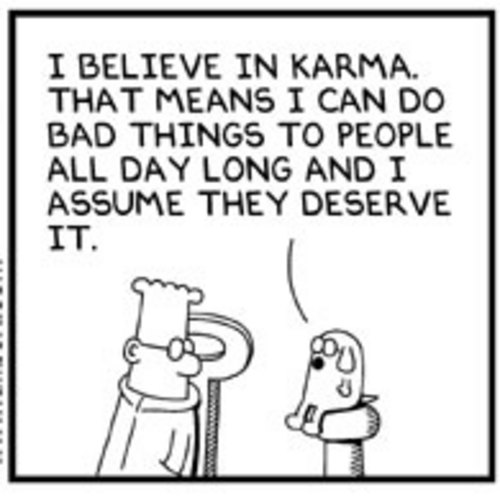 |
| Sorry, Dogbert. It doesn't work that way. |
We have all heard of karma. Simply put, it states that all actions have a reaction. These consequences may be good or they may be bad. Karma reminds you to be mindful in the things that you do. Sometimes children do something and when asked why they did it, the response is: "I don't know." If you do not know why you are doing something, then you should just to not do it. Karma reminds us to always ask: "What are the consequences of my actions?"
Kama: The pleasure of living (within the limits of Dharma and Karma)
Life is a gift. We should enjoy it. But Kama does not allow us to just do whatever we want. It doesn't say that we can start daydreaming in class or stay up all night watching movies. What is the consequence of daydreaming? Perhaps it is that we don't know what an assignment is. That's Karma! And, if our focus is gaining knowledge, then we are not following Dharma. What is the consequence of staying up all night watching movies? Perhaps it is that we miss school and miss out on learning and socializing with our friends. This violates Dharma and produces negative Karma.
Moksha: Salvation or Spiritual Liberation
 |
| A perfect example of what not to do! |
- Knowledge: You can gain salvation through disciplined study of the Vedas, ethical training and meditation. But historically, those in India have been illiterate, and so this path has not been available to the majority of Hindus.
- Good deeds: You can gain salvation through the selfless performance of Dharma. This means that you are fulfilling your duties because it is the right thing to do, and not for any reward. In order to gain spiritual liberation through good deeds, you must be unattached to the outcome. So, if I was to donate my time and money to curing cancer, that would be a good deed. But, if I am doing it partially because people will see my name on a donor's list and I want people to know that I am donating my time and money to the cause, then this is self serving. In this instance, I am attached to the outcome and it doesn't truly count as a good deed.
- Devotion: complete surrender to the higher power. This is the goal of the Hermit stage of life. It is the most difficult to obtain.
Take a look at the map below:

Our symbol for Buddhism is a hot pink. Very little of the map is actually this color. This means that there are few places in the world where the majority of people practice Hinduism. But, in India, most people are Hindus.
Since India is the 2nd most populous country in the world,
Hinduism is still the 3rd largest religion,
with 950 million followers!
Sources:
A very special thanks to Veejay Parashar. After being told by her son that the text had it all wrong, she graciously answered my questions and set me straight on the main tenets of Hinduism. It is from that conversation (and a little further research) that I teach from.
http://www.religioustolerance.org/hinduism.htm
http://www.sanskrit.org/www/Hindu%20Primer/dharma.html
Pictures:
http://www.p12.nysed.gov/ciai/socst/grade3/geoimages/Image12.gif
http://wallpapers-junction.com/Images/Hindu_Gods.jpg
http://whmscomputerlab.wikispaces.com/file/view/vedas.jpg/126846943/vedas.jpg
http://dadsprimalscream.files.wordpress.com/2011/09/karma-large-msg-11401312842-2.jpg
http://school.discoveryeducation.com/clipart/clip/student1.html
http://www.co.campbell.va.us/depts/yacs/PublishingImages/sc_img1.jpg
http://upload.wikimedia.org/wikipedia/commons/thumb/3/33/Bundeswehr_G36.jpg/250px-Bundeswehr_G36.jpg
http://www.learnnc.org/lp/media/collections/freeman/thai_ramayana/600/thai_rama_039.jpg
http://www.cartoonstock.com/newscartoons/cartoonists/pfi/lowres/pfin130l.jpg
Saturday, October 22, 2011
Translating Hieroglyphs
 |
| Battle of the Pyramids by Antoine-Jean Gros |
In 1798, Napoleon Bonaparte's men landed in Egypt. The military goal of the Egyptian campaign was to gain French domination in the east by capturing Egypt and Syria and disrupt England's trade routes.
 |
| The hall of the Institute of Egypt in Cairo, Egypt |
Housed in several palaces in Cairo, they studied matters of engineering, geology, botany, zoology, and more. It was made clear to all French soldiers that their eyes should be out for any curiosities of ancient Egypt.
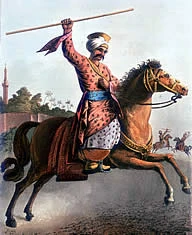 A great discovery was made while the French were digging in, protecting their weakening hold on Egypt from attack by the British, the Ottomans, and the Egyptian Mamluk cavalry.
It was in Rosetta, Egypt that while a group of soldiers, under the command of Major Francois-Xavier Bouchard, were demolishing the city wall. Built into the wall was a black stone. Bouchard recognized that this stone might make it possible to decipher hieroglyphs. And so the stone was carefully dug out and sent to the Institute.
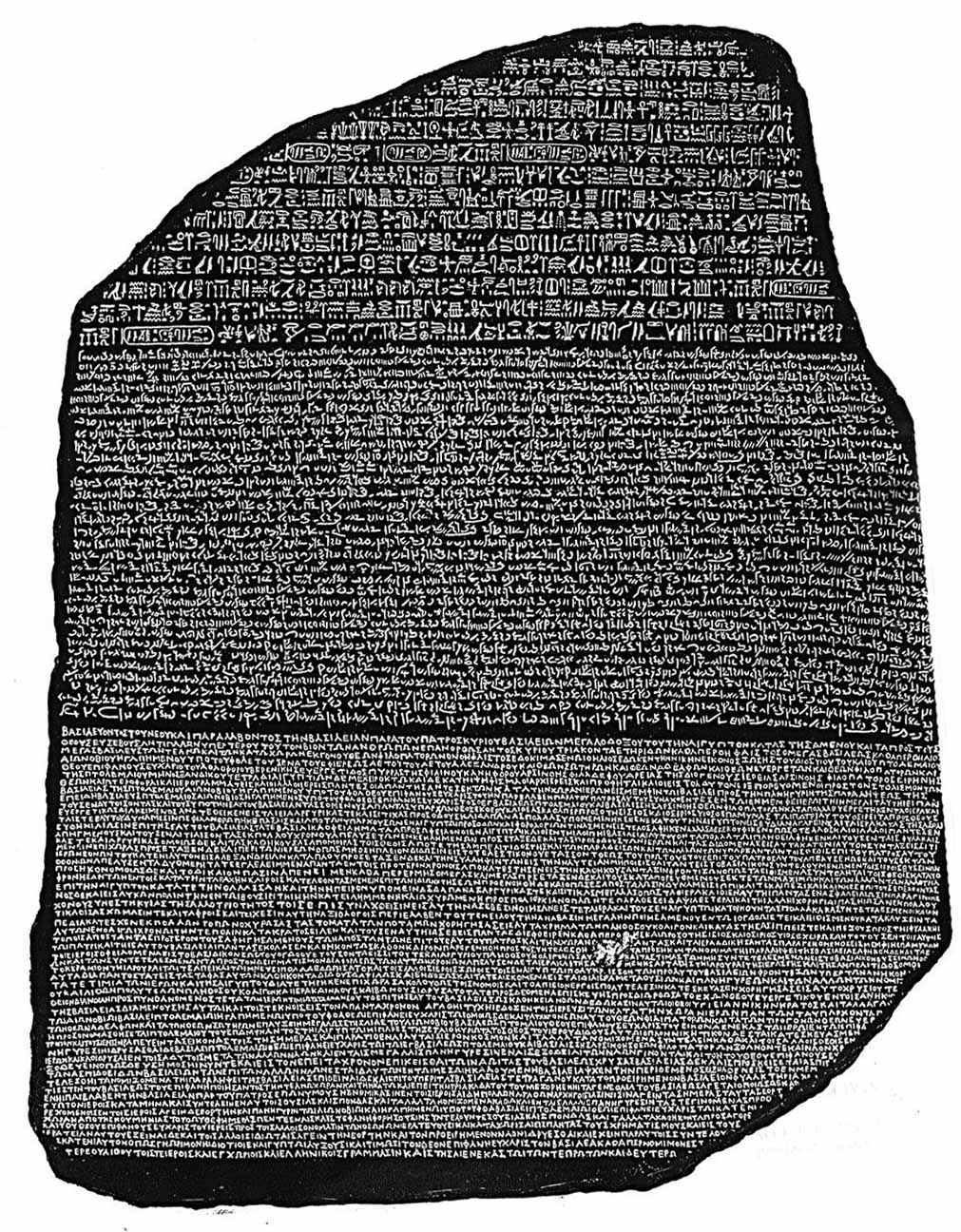
With the black stone was in the scientists hands, it was immediately known that it was the most important object in their possession. The scholars saw, like Bouchard, that the stone was bilingual. At the top were hieroglyphs. In the middle was an unknown language and at the bottom was Greek.
At first it had seemed a simple matter. The stone was trilingual. There were three languages on the stone that said the exact same thing. It would stand to reason that if one of the languages could be read, then so could the other two. And as luck would have it, the third language on the stone was Greek. And, of course, all of the scientists at the Institute of Egypt could read Greek. But for some reason, they still could not read the hieroglyphs
The men at the Institute went to the task of making a print of what came to be known as the Rosetta Stone. Using a few different methods, the stone was essentially used as a writing block. In this way, copies of the stone were sent back to France and on to other countries rather quickly. By the time that engravings of the Rosetta Stone were published in the Description de l'Egypte in 1822 (the books that were published of the findings of the Institute of Egypt), scholars had already spent years using the Rosetta Stone to try translate hieroglphyics.

 |
| A selection from Champollion's notebook |
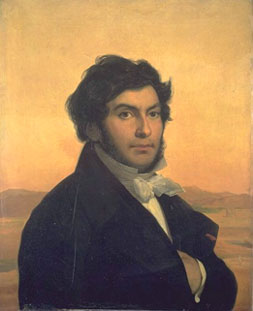 A young Frenchman, Jean-Francois Champollion, had been feverishly working to translate the lost language. He worked with the engraving of the Rosetta Stone and well as rubbings of other sets of hieroglyphs. He also collected cartouche, which were known to contain the names of Egypt's kings and queens.
In 1822, he discovered that Ptolemy's name appeared 5 times in the Greek section and that there were also 5 identical cartouche in the section of hieroglyphs.

He recognized five of the symbols in another cartouche. Filling in the signs he recognized and leaving space s for unknown hieroglpohs, the new cartouche read:
- L E O P - T - -
This obviously was the Egyptian queen Cleopatra. Champollion filled in the spaces.

(Ancient Egyptian had no C)
Had this been all there was to deciphering hieroglyphs, then the job would have been accomplished years earlier, but Champollion was to discover that not only did hieroglyphs include an alphabet of 24 letters, but also had hundreds of other symbols. For hieroglyphs also includes a syllabary (symbols for syllables) and pictographs (symbols for whole words).

What two things were needed to translate hieroglyphs?
2. Cartouche
(and the ingenuity of someone like Jean Francois Champollion!)
Cool Websites:
http://www.britishmuseum.org/explore/highlights/highlight_objects/aes/t/the_rosetta_stone.aspx
http://www.penn.museum/sites/egypt/writing.shtmlSources:
http://www.lindahall.org/events_exhib/exhibit/exhibits/napoleon/
http://www.pbs.org/empires/napoleon/n_war/campaign/page_3.html
http://upload.wikimedia.org/wikipedia/commons/thumb/9/99/Baron_Antoine-Jean_Gros-Battle_Pyramids_1810.jpg/300px-Baron_Antoine-Jean_Gros-Battle_Pyramids_1810.jpg
http://www.bmj.com/content/327/7429/1461/F3.large.jpg
http://cojs.org/cojswiki/images/b/b9/Ptol_Mys.jpg
http://liology.files.wordpress.com/2010/01/rosetta-stone.jpeg
http://www.nndb.com/people/863/000104551/champollion-1-sized.jpg
http://images.wikia.com/deadliestfiction/images/2/20/Mamluk.jpg
http://webhost.bridgew.edu/moore/champollion%20book.jpg
http://library.thinkquest.org/10005/media/photos/RosettaStone.gif
http://www.touregypt.net/images/touregypt/photo1.jpg
Subscribe to:
Posts (Atom)